
The hormone optimization guide.
An idiotproof formula for improving your hormones once and for all (includes testing, the most effective interventions, common root causes of hormonal dysfunctions, how receptors work and much more).

It’s George.
Let’s start this with a couple of disclaimers.
Disclaimer 1: Nothing in this article should be used as a substitute for medical advice.
Disclaimer 2: This is a very long article (it’s almost 70 pages) so take your time while going through it.
Now when most people think of hormonal dysfunctions, they usually think of manifestations as fatigue, weight changes, type 2 diabetes, PCOS, metabolic syndrome, hypothyroidism, mood swings, irregular periods, low libido, acne, infertility, sleep issues and even hair loss.
Yet, the topic of hormones is much more important, complex and fascinating.
First and foremost, have you ever wondered why we even need hormones?
What were the main reasons that evolution developed and kept such a complex chemical communication system?
From an evolutionary perspective, humans (and all complex animals) have hormones because they are essential for solving many of the challenges of multicellular life.
Without them, large, complex bodies with specialized tissues like ours could never have evolved or functioned.
Around 3.5–4 billion years ago, single-celled organisms used simple signaling molecules (such as cyclic AMP) to sense their environment, communicate with neighbors (through quorum sensing for example) and respond to threats.
But 600–800 million years ago, some lineages evolved multicellularity.
This created an entirely new set of challenges they had to adapt to such as:
How can distant cells work together when they can no longer all touch?
How can cells specialize while still cooperating instead of competing with each other? In a multicellular body, not every cell can do everything. Muscle cells are great at contracting but terrible at absorbing nutrients for example.
How can the body know how to properly allocate its resources? How does it decide for example whether to grow, reproduce, store energy, or fight infection when resources are limited?
How can the body maintain consistent internal conditions despite dramatic changes in the external environment?
How can you build a complex three-dimensional body with the right organs in the right places?
How can you protect the collective from infection, injury, and rogue “cheater” cells that multiply uncontrollably?
How can you perform social and behavioral integration?
How can you reliably create the next generation from such a complex system?
These were big problems and diffusion alone was not enough for coordination in anything bigger than a small clump of cells.
I am aware that these might sound too nerdy for some of you, but think about it.
Depending on whether you are a man or a woman, you have slightly more or slightly less than 30,000,000,000,000 cells.
These are a lot of cells that need to properly function, communicate with each other and perform tens of trillions of actions on a non-stop 24/7/365 basis.
Not to mention that 330 billion of them need to be replaced daily.
So, how would you coordinate all of these?
Well, a great tool would be hormones.
Why?
Here are a few key reasons:
Reach: Hormones can affect virtually every cell in the body.
Duration: Their effects can last minutes to days.
Integration: One hormone can coordinate many tissues at once.
Flexibility: They allow phenotypic plasticity
So hormones are soluble chemical messengers released into body fluids that enable individual cells to:
Coordinate
Specialize
Allocate resources
Maintain internal stability
Grow in organized ways
Defend the collective
Reproduce
all as part of a larger, integrated organism rather than as independent single cells.
Hormones are basically the language of integration for multicellular life.
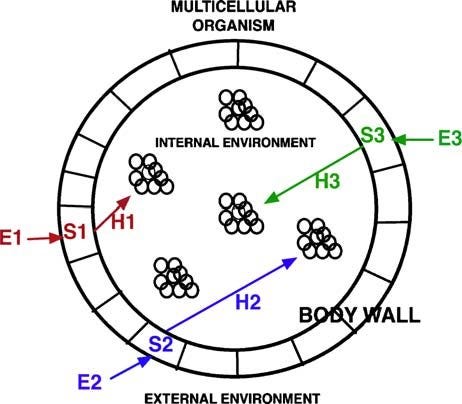
They are a sophisticated regulatory network that makes a multicellular body possible in the first place.
This is why virtually every complex animal on Earth relies on an advanced hormonal communication system.
Early multicellular animals (and even some of their single-celled relatives) already had the biochemical toolkit: steroid-like molecules, peptides, amine derivatives and evolution repurposed these for new roles in coordination.
Thyroid hormones for example coordinate metabolism across every tissue, oxytocin regulates bonding, trust, and parental care while sex hormones drive the development of specialized reproductive organs.
So hormones are one of evolution’s most powerful tools for environmental adaptation.
They give us the ability to adjust our biology in real time or across seasons without having to wait for genetic mutations to spread through a population (they allow the same set of genes to produce different outcomes depending on the conditions we face).
This is called phenotypic plasticity and hormones are the main switchboard operators.
Here are some key examples of how hormones help humans and other animals adapt:
1. Rapid response to immediate threats
The HPA (hypothalamic-pituitary-adrenal) axis evolved to help animals survive short-term, life-threatening situations such as predators, injury, famine, or social conflict.
Now when a threat is detected:
The hypothalamus releases corticotropin-releasing hormone (CRH).
This triggers the pituitary gland to release adrenocorticotropic hormone (ACTH).
The adrenal glands then secrete cortisol (and adrenaline for immediate action).
This loop is quite sophisticated since cortisol’s effects for example include:
Rapidly raising blood sugar by promoting gluconeogenesis and reducing glucose uptake in muscles.
Mobilizing stored fat and protein for quick energy.
Sharpening alertness and focus.
Temporarily shutting down non-essential functions like reproduction, digestion, growth, and immune activity (“survive now, reproduce later”).
Once the threat passes, negative feedback loops shut the system down.
This ancient “fight-or-flight-or-famine” strategy allowed early vertebrates to endure droughts, infections, injuries, and dangerous social situations.
The problem in modern life is that chronic stress keeps this system switched on, which was never intended.
2. Metabolic flexibility across different environments
Hormones give us the ability to thrive on wildly different diets, activity levels, and climates.
Feast mode (food abundance): Insulin drives glucose into cells and promotes fat storage, while leptin signals satiety to the brain.
Famine mode (food scarcity): Glucagon and cortisol mobilize stored glycogen and fat, while lowering metabolic rate to conserve energy.
Cold climates: Thyroid hormones (T3 and T4) increase basal metabolic rate and heat production (thermogenesis).
High-altitude or low-oxygen environments: Erythropoietin (EPO) and other hormones stimulate red blood cell production.
This flexibility was critical as our ancestors migrated into vastly different environments.
3. Seasonal and reproductive timing
Hormones help synchronize reproduction and physiology with environmental cycles.
Melatonin (produced by the pineal gland) acts as a “seasonal clock,” measuring the length of night. In many mammals, it triggers breeding only when daylight hours and food availability will support offspring survival.
Humans have retained some of this sensitivity: melatonin influences sleep, mood, seasonal affective disorder (SAD), and subtle shifts in fertility and metabolism.
Vitamin D (technically a steroid hormone) helped early humans adapt to different latitudes by regulating calcium absorption, immunity, and mood in response to varying sunlight levels.
These mechanisms helped time reproduction so babies were born during seasons with better food availability.
4. Water and salt/electrolyte balance in changing habitats
As our ancestors moved between freshwater rivers, coastal areas, and arid inland regions, they needed precise control over hydration and electrolytes.
Aldosterone (a mineralocorticoid) regulates sodium retention and potassium excretion in the kidneys.
Vasopressin (ADH) controls water reabsorption, urine concentration, and blood vessel constriction.
Together they maintain blood pressure, fluid balance, and electrolyte levels across dramatically different environments, from deserts to oceans.
This allowed mammals to colonize nearly every habitat on Earth.

5. Social and behavioral adaptation
In highly social species like humans, hormones help navigate complex group dynamics.
Oxytocin promotes bonding, trust, empathy, and parental care.
Vasopressin influences territorial behavior, pair bonding, and aggression.
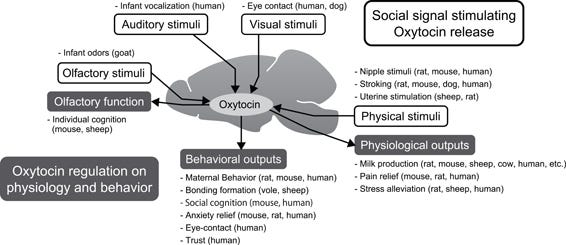
Here’s another example of why our hormonal system was so advantageous for us.
Unlike many animals that are highly specialized for one niche, humans are generalists.
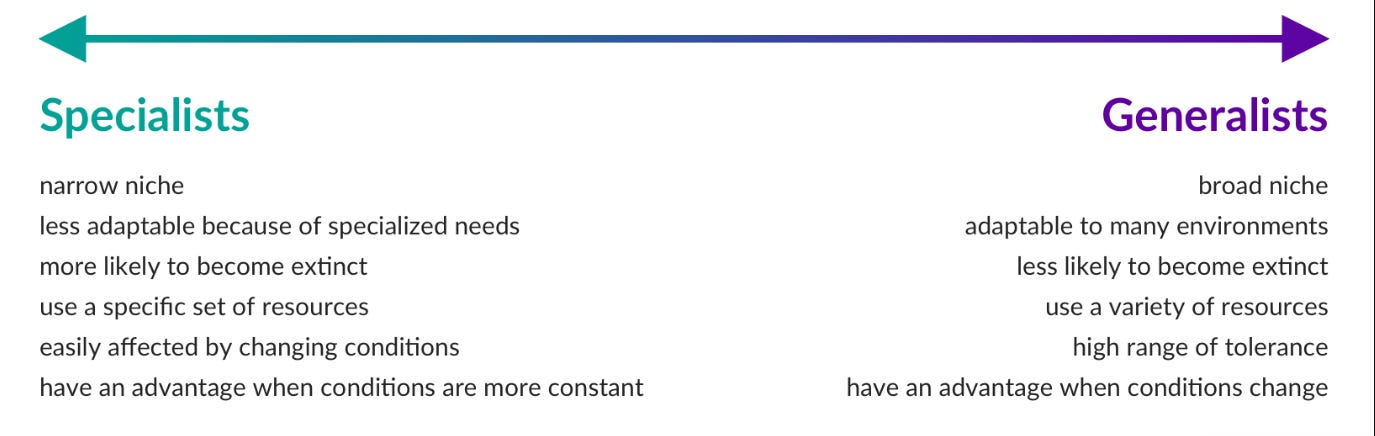
Hormones gave us biological flexibility:
A child growing up in a calorie-scarce environment can have slower growth and earlier puberty adjustments via hormones.
Pregnant mothers in famine can redirect resources to the fetus using placental hormones.
Adults can shift between “build muscle / store fat” modes or “high alertness / deep rest” modes.
This flexibility was crucial during the last 2 million years of dramatic climate swings, migrations out of Africa, and the development of agriculture and civilization.
Hormones let our bodies “track” the environment and adjust physiology on the fly.
The downside today is that our ancient hormonal systems evolved for unpredictable, feast-or-famine, high-physical-activity environments.
Chronic modern stressors (constant light, ultra-processed food, psychological stress, endocrine-disrupting chemicals) can keep these systems switched “on” inappropriately, leading to the metabolic, reproductive, and mental health issues we see now.
In short: Hormones didn’t just help us survive different environments.
They helped us thrive in them by turning our bodies into adaptable, responsive systems rather than rigid machines.
So overall: hormones are the body’s primary long-distance chemical communication system.
They allow distant parts of the body to “talk” to each other in a coordinated, flexible way that electrical nerves alone could never achieve.
Here’s how this overall communication works.
An endocrine gland (or cell) releases a hormone in response to a signal (nutrient level, stress, time of day, etc.).
The hormone circulates in blood (sometimes bound to carrier proteins).
Only cells with the right receptors “open” the message. This creates specificity.
The target cell changes its behavior, turning genes on/off, activating enzymes, releasing other signals, etc.
Most systems use negative feedback so the body doesn’t overreact.
Now the hormonal system does not work in isolation.
It forms a deeply integrated network with the nervous system, immune system, microbiome, and local signaling pathways.
Together, these systems function as one unified communication network.
One of the most elegant examples of this integration is neuroendocrine signaling.
Specialized neurosecretory cells act as biological transducers, meaning they convert electrical signals from the nervous system into chemical (hormonal) signals that enter the bloodstream.
Key examples include:
Hypothalamic neurons that “secrete” releasing and inhibiting hormones (such as TRH, CRH, GnRH) to control the anterior pituitary’s secretion of TSH, ACTH, LH, and FSH.
Hypothalamic neurons whose axon terminals release oxytocin and vasopressin directly into the bloodstream from the posterior pituitary.
Chromaffin cells in the adrenal medulla (modified neurons) that release epinephrine and norepinephrine during stress.
This connection allows the endocrine system to rapidly respond to external and internal changes.
For instance, emotional stress or perceived danger can activate the CRH–ACTH–cortisol axis within minutes.
Similarly, the suckling of a baby triggers oxytocin release, causing milk ejection.
Now the endocrine and immune systems also maintain a complex, bidirectional dialogue.
This relationship was first noticed when surgical removal of the pituitary gland was found to cause shrinkage of the thymus gland, a key organ in immune development.
The immune system can be viewed as a sensory system.
It detects bacteria, viruses, tumors, and other threats, then sends information to the brain and endocrine system through cytokines and other signaling molecules.
In turn, hormones powerfully modulate immune activity:
Cortisol and ACTH generally suppress immune responses (anti-inflammatory effect).
Estrogen tends to stimulate immune activity, while progesterone and testosterone are more suppressive.
Growth hormone and prolactin can enhance certain immune functions and support thymus activity.
Immune cells can even produce hormones and neuropeptides identical to those made by the brain and pituitary (such as ACTH), allowing them to partially override normal feedback loops during infection.
This crosstalk explains why chronic stress often weakens immunity and why many autoimmune diseases involve hormonal imbalances.
The immune system’s primary job is to distinguish “self” from “non-self.”
When this ability fails, it can attack the body’s own tissues, leading to autoimmune disease.
Endocrine glands are unusually common targets for autoimmune attack (classic examples include Hashimoto’s thyroiditis, type 1 diabetes and Addison’s disease).
And finally, many hormones and growth factors that drive normal growth and development can also promote cancer if their signaling becomes dysregulated.
Sex steroids (estrogen, progesterone, testosterone) are well known to drive growth in hormone-sensitive cancers (breast, endometrium, prostate).
Growth hormone, IGF-1, insulin, and various growth factors can stimulate proliferation in both normal and malignant cells.
Tumors controlled by pituitary hormones (such as TSH-driven thyroid cancer or gonadotropin-driven ovarian/testicular tumors) are also considered endocrine-related.
Importantly, cancer is rarely caused by a single mutation.
It usually develops through multiple genetic changes that activate proto-oncogenes (growth-promoting genes) and inactivate tumor suppressor genes.
Some tumors can even produce hormones themselves (ectopic hormone production), such as ACTH from certain lung cancers, leading to severe hormonal imbalances without normal feedback control. Additionally, cancer treatments (chemotherapy, radiation, surgery) can cause long-term endocrine complications.
So hormone evolution is the process by which ancient, primordial metabolic byproducts were gradually co-opted over billions of years to serve as complex, multicellular chemical messengers.
This biological communication system drives everything from reproduction and stress responses to growth and metabolism across all living organisms
The emergence and specialization of these regulatory pathways occurred in three primary phases:
Association phase: Simple metabolic byproducts (such as steroids or amino acid derivatives) naturally correlated with key environmental adaptations or physiological states.
Causation phase: Organisms developed mechanisms allowing these compounds to actively trigger or regulate specific survival and reproductive traits.
Integration phase: The evolution of highly specific biosynthetic pathways, transport proteins, and dedicated hormone receptors.
Now when it comes to evolutionary stages and mechanisms we have:
Primordial origins: Molecules that eventually became hormones are quite ancient. Steroids, for instance, are estimated to be over 4,000 million years old, initially existing as basic environmental bioregulators or simple metabolic waste before becoming highly specific signals.
Receptor co-evolution: A hormone’s function relies entirely on the existence of corresponding cellular receptors. Peptide hormones (like insulin or growth factors) and their target receptors are believed to have co-evolved as linked units.
Gene duplication: Peptide hormone families often grew in complexity through gene duplication. For example, the ancestral growth hormone gene in early vertebrates duplicated and diverged over time into distinct modern hormones like prolactin and somatolactin.
Hormonal pleiotropy: Because a single hormone can trigger multiple phenotypes simultaneously, evolution often favored changes in the sensitivity of specific target receptors rather than altering the hormone itself. This allowed species to adapt new physical traits without disrupting older, essential bodily functions.
Now let’s move on to different types of hormones, how they are produced and so on.
So far, we have been identified over 50 different hormones in us that are produced by various organs such as the:
Hypothalamus
Pituitary gland
Pineal gland
Thyroid
Thymus
Pancreas
Adrenal
Ovaries
Testes
Heart
Placenta
Kidneys
Stomach
Bones
Liver
Adipose tissue
Yes, all of these produce hormones.
While most people think of the reproductive organs or thyroid when they hear “hormones,” several organs with primary non-endocrine functions secrete crucial hormones as well.
For example:
Atrial natriuretic peptide (ANP) is secreted by the heart’s atria when blood pressure rises and signals the kidneys to excrete more water and salt, lowering blood volume and reducing blood pressure.
Ghrelin is released by an empty stomach to signal the brain to increase appetite and prepare for food intake.
Gastrin stimulates the stomach lining to secrete hydrochloric acid to digest proteins.
Leptin, while mostly made by fat cells, is also released by the stomach in a quick burst during meals to signal short-term fullness.
Erythropoietin (EPO) from the kidneys is released when oxygen levels in the blood are low. It travels to the bone marrow to stimulate the production of new red blood cells.
Calcitriol is also released by the kidneys and is the active, hormonal form of Vitamin D. It acts on the intestines to dramatically increase the absorption of calcium from food.
When it comes to the kidneys we can also talk about renin that is an enzyme that functions like a hormone. It initiates a chemical cascade to raise blood pressure when it drops too low.
Osteocalcin is secreted by bone-building cells (osteoblasts). It travels through the blood to increase insulin secretion from the pancreas and boost testosterone production in the testes.
Adiponectin produced by fat cells enhances the body’s sensitivity to insulin and helps regulate glucose levels.
Insulin-like growth factor 1 (IGF-1) is released by the liver in response to growth hormone. It is the actual molecule that triggers bone and tissue growth throughout the body.
Thrombopoietin also released by the liver, stimulates the bone marrow to produce blood platelets for clotting.
Now hormones can be classified according to their:
Chemical nature / molecular structure
This one, is the more common breakdown with specific examples for this category including:
-Steroid hormones such as cortisol, testosterone, estrogen, progesterone, and aldosterone.
-Peptide/Protein hormones such as insulin, glucagon, growth hormone (GH), and oxytocin.
-Amine hormones such as thyroxine (T₄), triiodothyronine (T₃), epinephrine, and norepinephrine.
Mechanism of action
In this one, hormones are classified by how they interact with cells, such as through cell-surface receptors or intracellular/nuclear receptors.
In the first one they utilize second messengers like cAMP and in the second they directly alter gene expression.
Specific examples for this category include:
-Membrane bound receptor (water-soluble) such as insulin, epinephrine, and glucagon (these use second messengers like cAMP).
-Intracellular / nuclear receptor (lipid-soluble) such as cortisol, testosterone, and thyroid hormones (T₃/T₄).
Nature of action
In this one, hormones are categorized into local and general.
By “local” we mean acting on nearby cells/tissues and by “general”, circulating through the bloodstream to distant targets.
Specific examples for this category include:
-General hormones such as growth hormone, insulin, and thyroid hormones (circulate through the blood to affect almost all body cells).
-Local hormones such as acetylcholine, histamine, and prostaglandins (act immediately on the tissues near their release site).
Their effects
In this one, hormones are categorized based on the physiological changes they trigger, such as tropic hormones (which stimulate other endocrine organs), kinetic hormones (causing muscle contraction or pigment migration), or metabolic hormones.
Examples of kinetic hormones include oxytocin (causes uterine contractions) and epinephrine (speeds up heart rate).
Metabolic hormones include insulin (lowers blood glucose) and glucagon (raises blood glucose).
Behavioral hormones include sex hormones like testosterone and estrogen (influence reproductive behavior).
Stimulation of endocrine glands
In this one, hormones are categorized based on whether they act upon target tissues or if they are tropic hormones whose primary job is to stimulate other endocrine glands to release their respective hormones.
Examples of tropic hormones include adrenocorticotropic hormone (ACTH) that stimulates the adrenal cortex and thyroid-stimulating hormone (TSH) that stimulates the thyroid gland.
Examples of non-tropic hormones include antidiuretic hormone (ADH) that acts directly on the kidneys and prolactin that acts directly on the mammary glands.
Proximity of site of synthesis to site of action (quite rare to be fair but worth knowing)
This category groups chemical messengers based on how far they must travel from the producing cell to reach their target receptors.
We have:
-Autocrine hormones: Those that act directly on the same cells that synthesize and secrete them.
Examples include Interleukin-2 (IL-2) in white blood cells.
-Paracrine hormones: Those that are synthesized very close to their site of action and diffuse locally through interstitial fluid to target neighboring cells.
Examples include somatostatin in the pancreas, histamine, and neurotransmitters at a synapse.
-Endocrine Hormones: Those that are synthesized by specialized endocrine glands or cells and transported through the bloodstream to act on distant target cells.
Examples include insulin, cortisol, and growth hormone.
So the endocrine system has a monopoly on endocrine (blood-traveling) hormones, but it does not have a monopoly on chemical messengers since many local (autocrine/paracrine) messengers are produced by ordinary body cells or entirely different systems that are completely outside the endocrine system such as the immune system or the nervous system.
Overall think of these as three different methods of communication used within the same overarching network.
Solubility
This category groups hormones by their physical ability to dissolve in water or fats, which determines how they travel through the blood and cross cell membranes.
We have:
-Water-soluble (hydrophilic): These hormones dissolve easily in water and blood plasma, allowing them to travel freely through the bloodstream.
However, they cannot pass through lipid cell membranes and must bind to surface receptors.
Examples include peptide/protein hormones (insulin, glucagon) and catecholamines (epinephrine, norepinephrine).
-Lipid-soluble (lipophilic/hydrophobic): These hormones cannot dissolve well in water, so they require special carrier proteins to travel through the bloodstream.
However, they easily pass directly through lipid cell membranes to find receptors inside the cell.
Examples include all steroid hormones (cortisol, testosterone, estrogen) and thyroid hormones (T₃/T₄).
Now overall, in most textbooks, they are divided to six classes (we will break down each one in detail in a moment):
Steroids: These are lipid-soluble molecules derived from cholesterol in animals or triterpenoids in plants.
Amines: These are derived from single amino acids like tyrosine or tryptophan. This includes animal catecholamines and plant regulators like auxin.
Peptides: These are short chains of amino acids.
Proteins: Long, complexly folded chains of amino acids, such as insulin or growth hormone.
Glycoproteins: Large carbohydrate-protein complexes, specifically crucial in human reproduction and thyroid control (think TSH, LH, FSH).
Eicosanoids: Molecules derived from 20-carbon fatty acids (like arachidonic acid). They function primarily as local or paracrine hormones (an example is prostaglandins which trigger inflammation/fever, and thromboxanes which facilitate blood clotting).
Now sometimes, gases such as ethylene and nitric oxide are also included.
Ethylene (C₂H₄) is a gaseous plant hormone famous for regulating fruit ripening and leaf drop.
Nitric Oxide (NO) acts as a local gaseous hormone that diffuses instantly across membranes to relax blood vessels (vasodilation) and lower blood pressure.
Now the breakdown that you just read is entirely based on their chemical nature / molecular structure.
This is the most fundamental classification system in biochemistry because the physical and chemical structure of a molecule dictates exactly how it will behave in a living organism.
A hormone’s molecular structure automatically determines three critical behaviors:
Solubility: Structure determines whether a hormone is lipid-soluble (hydrophobic, like steroids and eicosanoids) or water-soluble (hydrophilic, like peptides, proteins, and glycoproteins).
Transport method: It dictates how the hormone travels. Water-soluble hormones dissolve easily in blood or plant sap, while lipid-soluble hormones require special carrier proteins to move through aqueous environments.
Receptor location: It decides the mechanism of action. Because of their chemical nature, large or water-soluble molecules must bind to cell-surface receptors, whereas small lipid-soluble molecules and gases can slip straight through the plasma membrane to find internal receptors.
Now i came to the conclusion that the best way to understand hormones is to understand the organs that produce them first and then analyze each hormone even more.